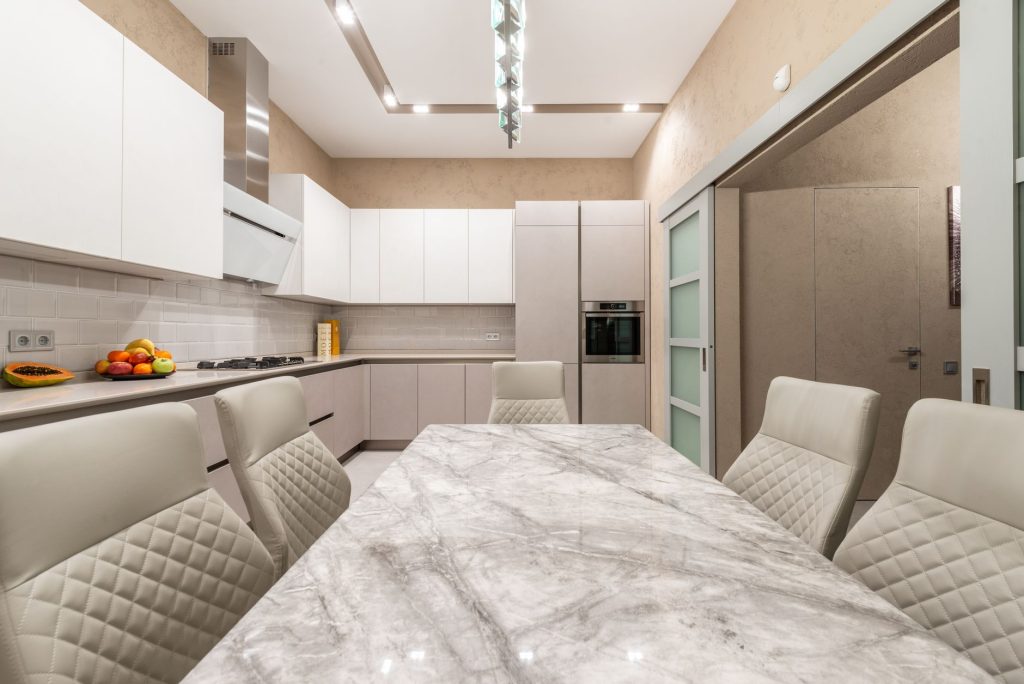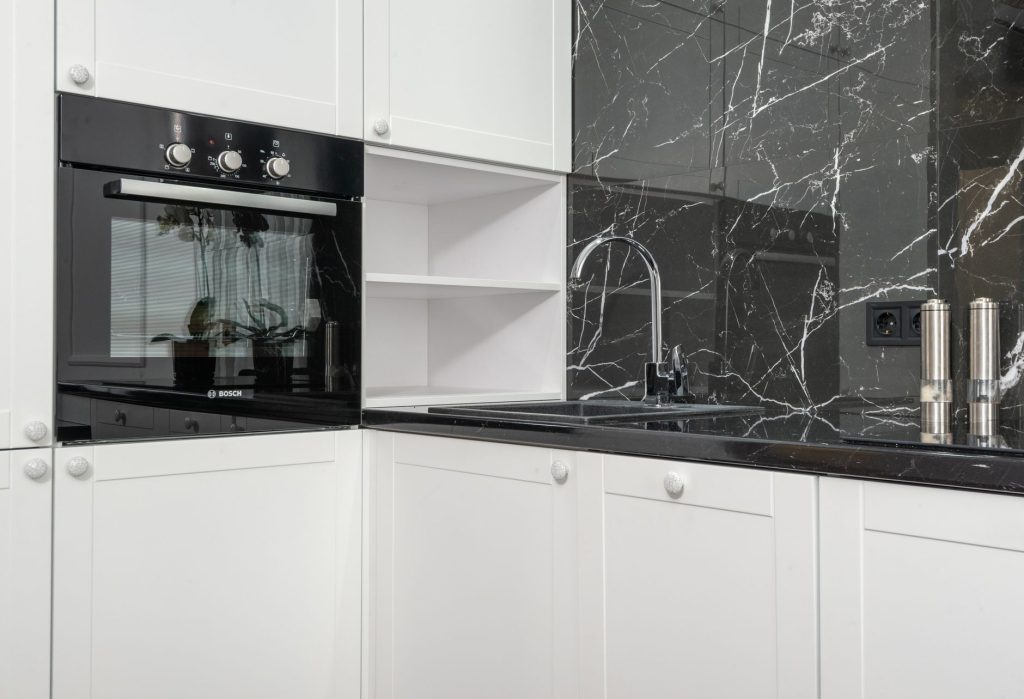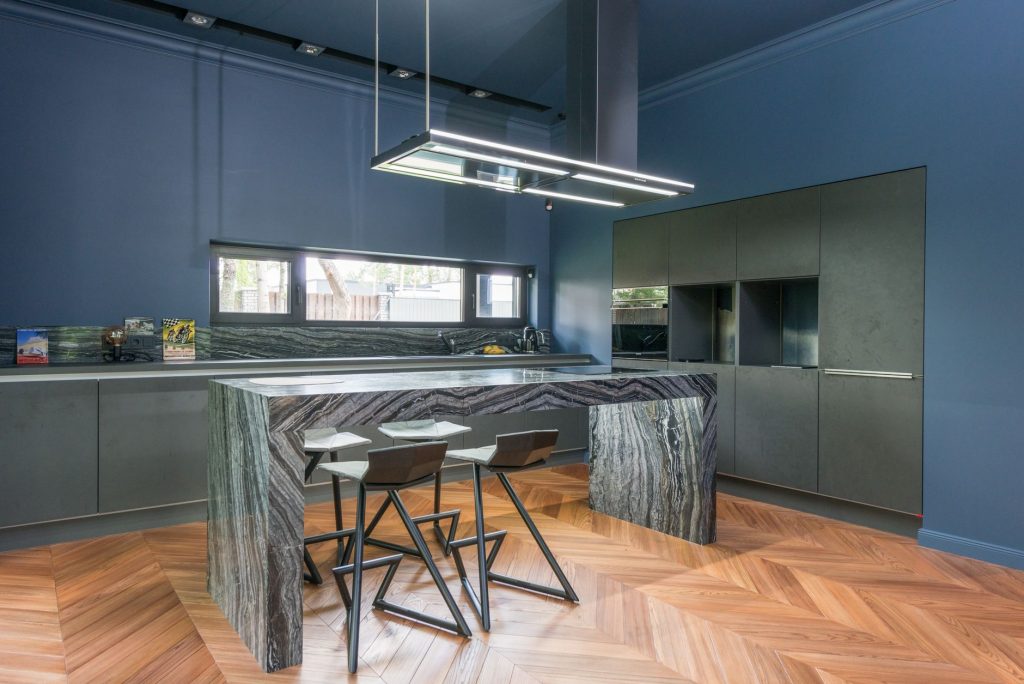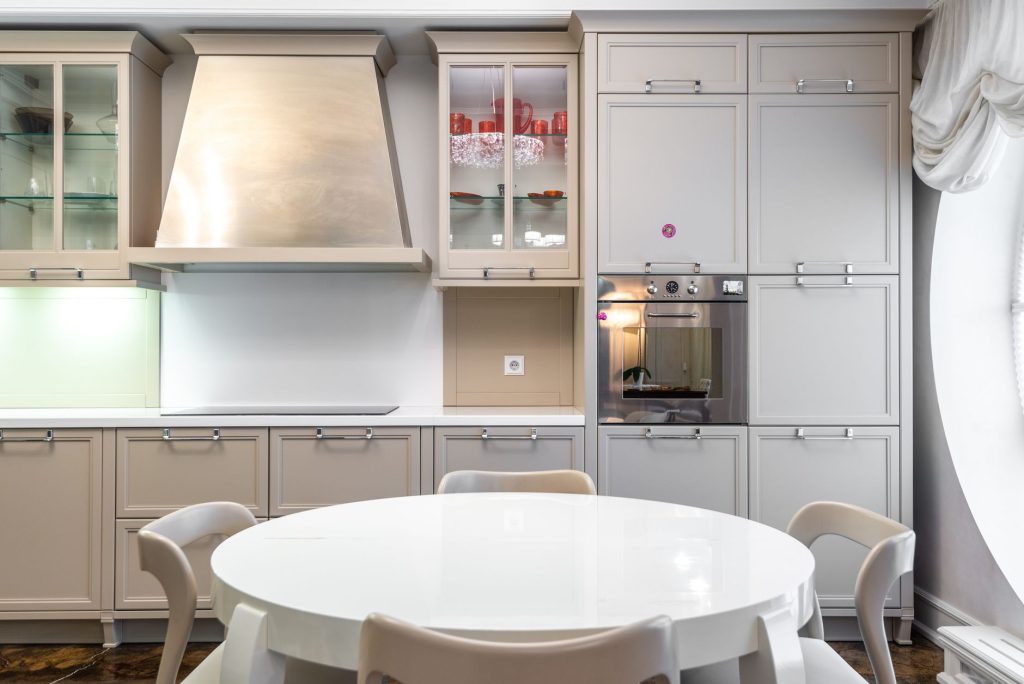
Five years ago, maybe one client a month would ask us about porcelain benchtops. Now it’s a regular part of almost every consultation, right alongside quartz and natural stone. If you’ve been scrolling renders on Pinterest or walking through display kitchens in Alexandria, you’ve probably noticed it too — that chalky, almost concrete-like matte finish, or the convincing marble veining that doesn’t look printed.
We’ve installed a fair few porcelain benchtops now, in kitchens from Mosman to the Inner West, and we’ve got opinions. Porcelain is genuinely excellent in certain situations. It’s also not the upgrade some suppliers make it out to be. Here’s the honest version.
What porcelain actually is
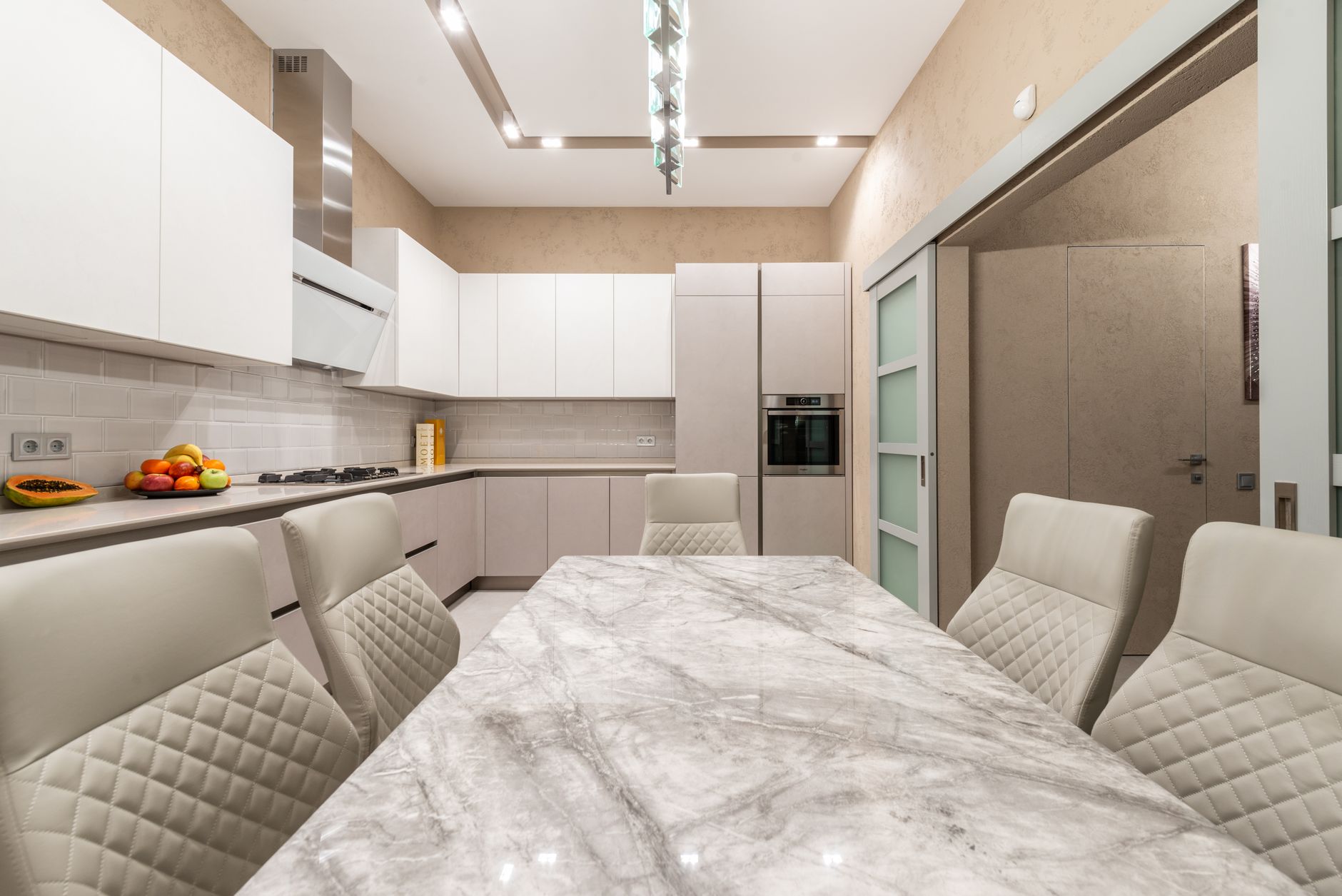
Porcelain benchtops are made by compressing fine clay, quartz, feldspar and mineral pigments under extreme pressure, then firing them at temperatures well over 1,000 degrees. The result is a dense, non-porous slab that behaves more like a tile than a stone — because technically, that’s what it is. It’s usually sold in large format sheets, 12 to 20mm thick, and it’s often backed with a fibreglass mesh to help with handling and installation.
That manufacturing process is exactly why it has strengths that quartz and natural stone can’t match — and exactly why it has a couple of real weak points too.
Where porcelain genuinely earns its reputation
Heat
This is the big one. You can put a hot pan straight onto a porcelain benchtop without a trivet and not think twice about it. Quartz can’t handle that — the resin binders scorch and discolour. Natural stone handles heat better than quartz but can still thermal-shock if you’re unlucky. Porcelain, having already been fired at over 1,000 degrees, just doesn’t care. For anyone who cooks properly and hates fussing with heat mats, this alone can be the deciding factor.
UV stability
If you’re doing an outdoor kitchen — and we’re doing a lot more of these for clients in Northern Beaches and North Shore homes with decent alfresco areas — porcelain is close to the best material available. It won’t fade, yellow or chalk in direct sun the way some quartz products do over a few summers.
Scratch and stain resistance
The surface is extremely hard, harder than granite in most cases, and it’s non-porous, so there’s no sealing required and no risk of red wine or turmeric leaving a stain if you wipe it up in reasonable time. Knives won’t score it under normal use.
Look and scale
Large format slabs mean fewer visible joins across a long run, which matters a lot in open-plan kitchens with 3.5 to 4-metre islands — common in the newer builds we see around Castle Hill and the Hills District. The finishes have also genuinely improved. Early porcelain ranges looked a bit flat and obviously fake next to real marble. The current generation, from brands like Neolith, Dekton and Laminam, is much harder to pick at a glance.
Where it falls short — and nobody likes admitting this part
Porcelain’s strength is also its weakness. Because it’s so hard and so thin relative to stone, it’s brittle in ways that catch people off guard.
- Edge chipping: the material is less forgiving on exposed edges and corners than quartz or granite. A dropped cast iron pot on a mitred edge can chip it, and unlike quartz, that chip is hard to polish out invisibly.
- Fabrication skill matters enormously: cutting, routing for sinks and cooktops, and mitring edges requires specialised equipment and an experienced fabricator. Get the wrong installer and you’ll see hairline cracks appear around cut-outs within a year.
- Repairs are genuinely difficult: there’s no sanding out a scratch or chip the way you can with quartz or stone. Damage is often a full panel replacement.
- Colour depth: despite the improvements, porcelain still doesn’t quite replicate the depth and movement you get in a slab of real Calacatta or Carrara. If you want that genuine three-dimensional veining under downlights, stone still wins.
We’ve also noticed that porcelain is less forgiving during transport and installation than people expect. It needs to be handled with suction cups and moved carefully — a slab that’s fine in the warehouse can crack on the truck if it’s not braced properly. That’s not a reason to avoid it, but it’s a reason to only use fabricators who do this regularly.
Cost — is it actually cheaper?
Porcelain sits roughly in line with mid-to-premium quartz, sometimes a touch above once you factor in specialist fabrication and installation labour. It’s rarely the budget option it’s sometimes marketed as. If cost is your main driver, a well-chosen quartz will usually get you more benchtop for your money.
Our honest recommendation
If you cook a lot, want an outdoor kitchen, or you’re after that oversized island with minimal joins and a genuine matte stone look, porcelain is worth the conversation. If you’ve got young kids who treat the kitchen like a demolition site, or you’re after that deep, glassy marble look at a reasonable price, we’d usually steer you toward quartz or natural stone instead.
The material itself isn’t the risk. A poorly briefed fabricator is. We’ve seen beautiful porcelain installs in Double Bay apartments that have held up for years without a mark, and we’ve seen rushed jobs crack within months. The difference always comes down to who’s cutting and installing it.
If you’re weighing up porcelain against stone or quartz for your own renovation, it’s worth getting a proper read on your specific layout, cooking habits and budget before you commit. Contact Kenwood Kitchens today and we’ll walk you through the options honestly, including the ones we wouldn’t recommend for your situation.